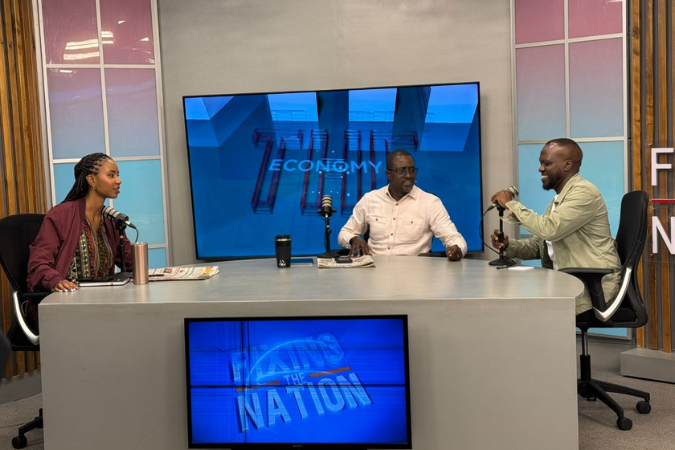
“Freelancing or building a company? It’s a choice every filmmaker faces sooner or later.”
Two separate invitations this month made that question feel urgent. LBx Africa C.E.O Bramwel Iro was invited to lead a six-session workshop called Filmmaking as a Business with SomeFineDay Pix and Head of LBx Africa Studio, Sam Soko spoke about the business of film live on NTV’s Fixing the Nation.
Neither invite was coordinated and this shows how this topic is on a lot of people’s minds right now.
Below are a few practical observations we’ve been discussing at LBx, from what works to what’s worth rethinking.
Freelancing gives flexibility. You can jump between projects, try different roles, but it also means income can be irregular, negotiating power is limited, and long-term growth is harder.
Running a production company changes that balance. You add structure; departments for finance, marketing, impact, equipment, etc, and that creates more stable revenue streams. At the same time, it comes with responsibility: payroll, systems, taxes, and time spent on business tasks rather than creative ones. There’s no single right answer; it depends on the life you want and the work you plan to do.
As Soko put it during his NTV interview, “you can’t build an industry on favours and grants.” A company mindset forces us to look beyond one-off opportunities and towards sustainable models that can survive market realities.
Why think of film as a business (not just “how to make money”)
Thinking like a business helps make decisions that protect creative control and make projects sustainable.
Here are some of the real benefits we’ve noticed when filmmakers approach their work as a business:
• Clearer budgets and timelines that reduce last-minute chaos.
• Professional contracts that protect everyone’s rights.
• Repeatable distribution and impact pathways (so films reach audiences beyond premieres).
• Room to reinvest profits into new projects or equipment.
This isn’t about chasing profit for its own sake. It’s about creating the conditions where more stories can be made, better recognised, and fairly compensated.
In his NTV interview, Soko mentioned that respecting the audience is central to this. “Our audience is the key to unlocking all these things we are doing… Filmmakers must honour their audience, and audiences must also value the work of filmmakers.” In other words: the business case is about value flowing both ways.
Training and mentorship matter
Bramwel’s SomeFineDay Pix workshop is designed around exactly this: leadership, packaging projects, market strategy, co-productions, and distribution. These are not topics you “pick up” on set, they’re practices that benefit from guided mentorship, case studies, and peer accountability.
For the creative producers with a project in development who got accepted into the workshop, it’s a good space to sharpen the business skills that sustain a career.
The workshop runs from 29 Sept–10 Oct.
Systems over hustle
One takeaway we keep returning to: hustle alone is not a strategy. Systems are. Building reliable financial systems, using simple production workflows, and documenting processes saves time and money. That discipline lets creatives spend more of their energy on story, not admin.
Soko called Kenya’s industry a “teenager” full of potential but still growing into its identity. To mature, we need consistency: more films being made more often, supported by systems that outlast individual hustles.
Your turn
If this topic interests you, we’d love to hear from you:
• Are you freelancing and thinking of building a company? What’s holding you back?
• Are you already running a production business, what practical advice would you give others?
Hit us up on socials.